Operator checklist before you order sheet pans:
- Check the size of your oven and your pan racks.
- Decide how many pans you need at peak, and add spares.
- Choose the gauge and finish for the foods you bake.
- Plan how the pans will be washed and stored.
- Compare the price per pan across different case sizes.
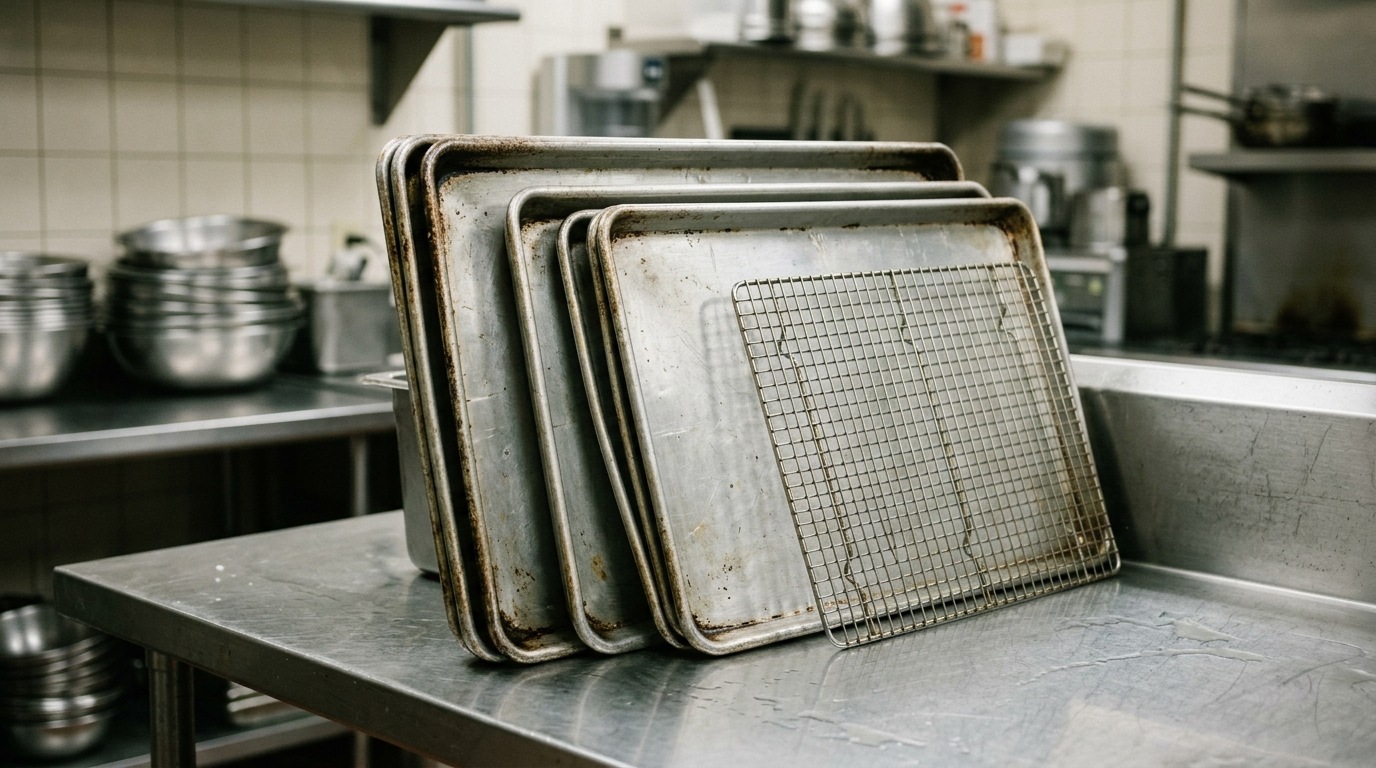
A sheet pan is the workhorse of a commercial kitchen. It bakes cookies, roasts vegetables, holds prepared food and carries trays to the dining room. Because it is used constantly, the details matter: size, thickness, finish and care decide how long a pan lasts and how well it performs. This guide explains the standard sizes, what gauge and finish mean, and how to keep pans flat and clean.
This is general information about foodservice supplies. Follow the maker’s care instructions, and check local health rules for items that touch food.
Standard sheet pan sizes
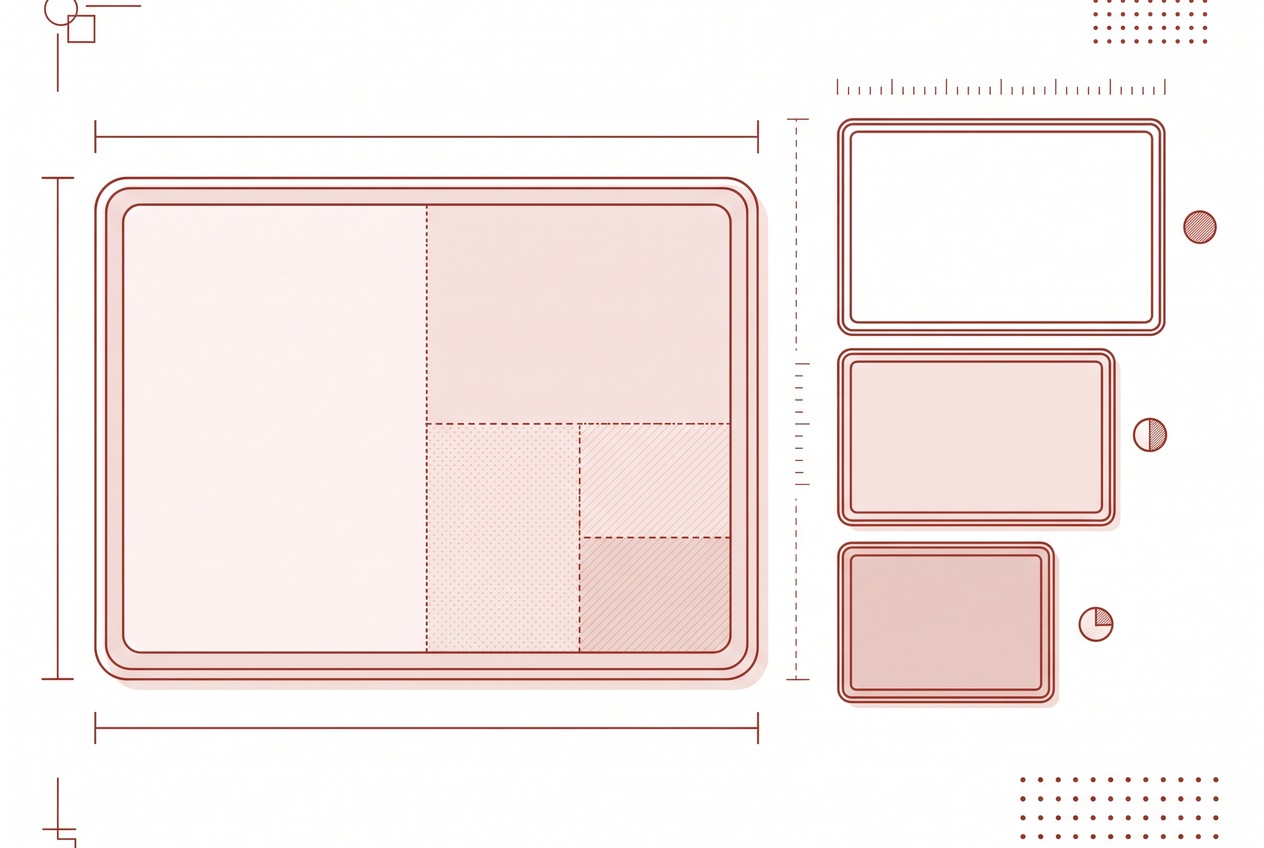
Sheet pans follow a standard size system based on the full-size pan.
| Size | Approximate dimensions | Common use |
|---|---|---|
| Full | 18 by 26 inches | Large ovens, bulk baking, bakeries |
| Two-thirds | 15 by 21 inches | Specialty ovens |
| Half | 13 by 18 inches | Most standard ovens, small kitchens |
| Quarter | 9 by 13 inches | Small batches, toaster ovens |
Most home and small commercial ovens take a half-size pan, while full-size pans need a commercial oven and a matching rack. Measure your oven and rack before ordering, and check that the pan has room around it for air to flow.
Gauge and thickness
Gauge indicates the thickness of the metal, and a lower number means thicker metal. Commercial aluminum sheet pans are commonly 18 gauge, which balances weight and strength. Heavier 16 gauge pans resist warping better and cost more. Lighter 19 or 20 gauge pans suit light duty and tight budgets, but they bend more easily.
Warping happens when a pan heats unevenly or cools quickly. A rolled rim, often reinforced with a steel wire, helps the pan keep its shape. Avoid placing a hot pan under cold water, since the sudden change in temperature can cause it to buckle.
Materials and finishes
- Bare aluminum: conducts heat well, browns evenly and is inexpensive. It can discolor over time, which does not affect performance.
- Anodized aluminum: a harder surface that resists scratching and staining. Check the care instructions before using acidic foods.
- Nonstick coated: releases food easily and cleans quickly, but the coating wears and may need replacing sooner.
- Stainless steel: durable and easy to sanitize, but it conducts heat less evenly than aluminum.
- Perforated pans: small holes allow air to circulate, which helps with crisp crusts on bread and pizza.
Choose the finish that fits what you cook. Bakeries often prefer bare aluminum for even browning, while prep kitchens may favor anodized or coated pans for faster cleaning.
Wire racks and liners
A wire rack fits inside a sheet pan and lifts food above the surface, which lets air circulate. Use racks for roasting, cooling and draining fried foods. Check that the rack fits the pan you own, since sizes vary slightly.
Parchment paper and silicone liners protect pans, reduce sticking and make cleanup quicker. Parchment is disposable and cheap per sheet, while silicone liners are reusable but take storage space.
Pan racks and storage
A mobile pan rack holds sheet pans upright and lets them cool before they are handled. Check the number of slots and the spacing between them. Racks come in different heights, so measure the walk-in cooler door and the ceiling.
Store pans stacked or on edge in a dry place. Wet pans stacked together can stain and trap moisture, so dry them before storing.
Cleaning and care
- Wash by hand or in a commercial dish machine, according to the maker’s instructions.
- Avoid harsh alkaline detergents on bare aluminum, which can darken the surface.
- Don’t scrape with metal tools on nonstick pans.
- Dry pans fully before stacking.
- Rotate pans so wear is spread evenly.
When to replace a pan
Replace a sheet pan when it warps so that it no longer sits flat, when a coating peels or when pitting or rust makes it hard to clean. A pan that rocks on the oven rack heats unevenly, which affects results.
Common mistakes
- Ordering full-size pans for an oven that takes half-size pans.
- Choosing the lightest gauge to save money, then replacing pans every season.
- Washing bare aluminum in harsh alkaline detergents and wondering why it darkens.
- Stacking wet pans and trapping moisture between them.
- Using one pan type for every task instead of matching the finish to the job.
Questions to ask before you buy
- What gauge and alloy is the pan, and does it have a reinforced rim?
- What are the exact dimensions, and do they fit my oven and rack?
- Is the finish safe for acidic foods and for my dish machine?
- How many pans come in a case, and what is the price per pan?
- What is the return policy if pans arrive warped?
Cost per pan
Compare pans by cost per expected use. A pan that costs a little more but lasts several years is cheaper than one that warps in months. Also factor in case pricing, since buying by the case often lowers the price per pan.
The summary
Pick the size that fits your oven and racks, choose a gauge and finish that suit your menu and care for the pans by drying them well and avoiding sudden temperature shocks. A good sheet pan is a small purchase that pays back every day in the kitchen.