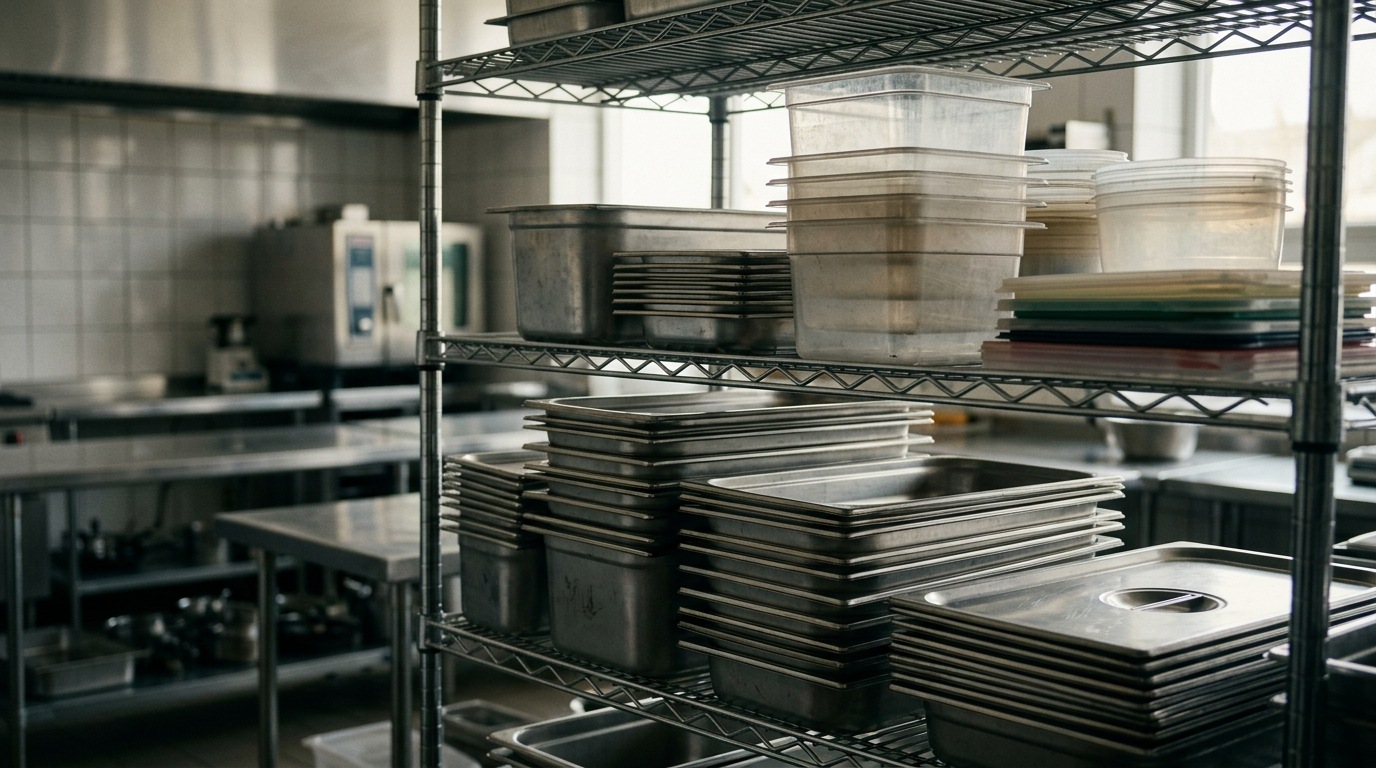
Operator checklist before you order food pans and containers:
- Measure the steam table wells, the shelves and the refrigerator racks the pans must fit.
- List the sizes and depths you use on the busiest day.
- Decide which items need heat resistance and which are cold-only.
- Count lids, since a pan without a lid is half a product.
- Compare the gauge and material, not just the price per piece.
Food pans and storage containers look simple, yet they are among the most used items in a kitchen. Every shift, they hold prep, move food between stations and keep leftovers safe. Buying the wrong sizes or materials causes problems that repeat daily. This guide explains the standard sizes, the common materials and the lid and storage details that decide whether your pans earn their keep.
This is general information about foodservice supplies. Health codes and food safety rules differ by location, so check your local health department for requirements.
The standard pan size system
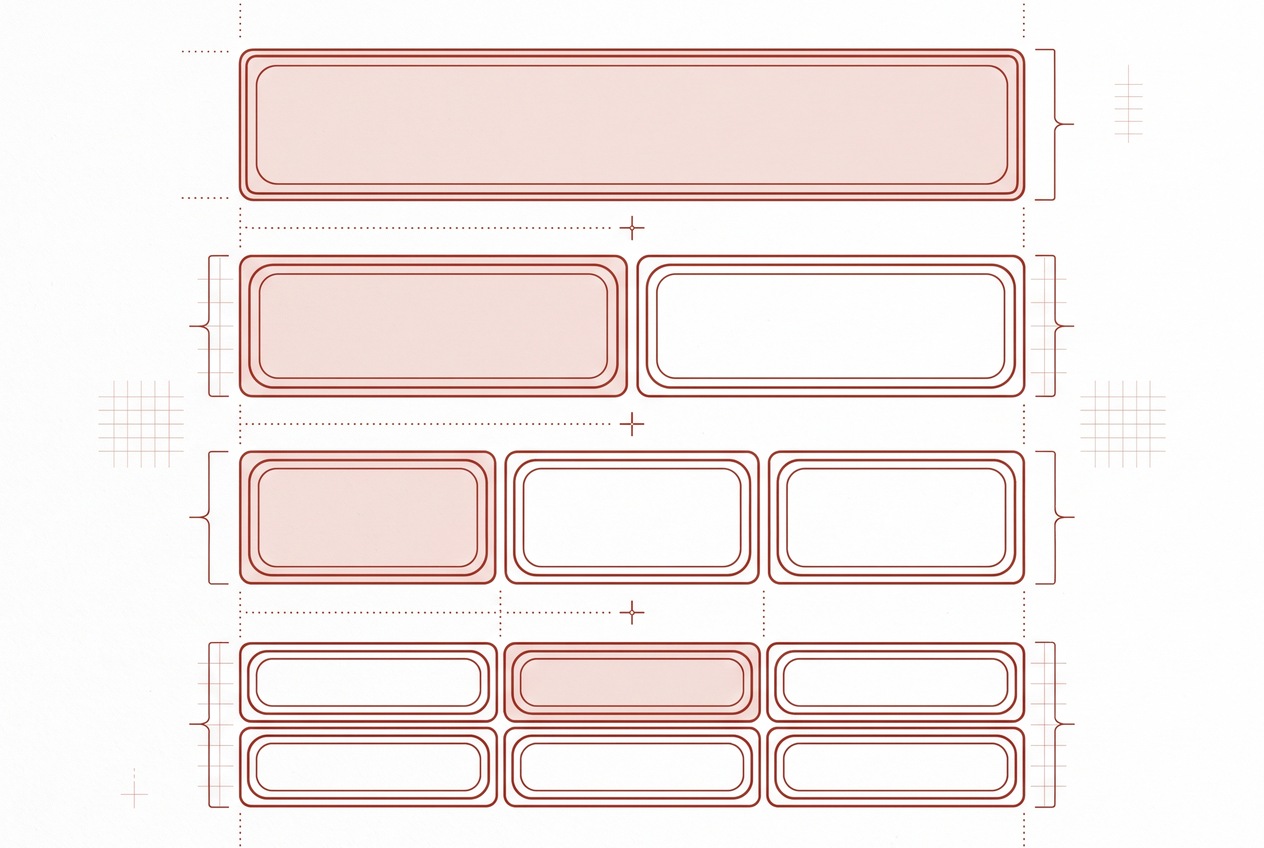
Most food pans follow a standard fraction system based on the full-size pan, which measures about 12 by 20 inches. Other sizes are fractions of that footprint, so several smaller pans can fill the space of one full-size pan in a steam table or a cold well.
| Pan size | Fraction of full size | Common use |
|---|---|---|
| Full | 1/1 | Bulk prep, large batches, roasting |
| Half | 1/2 | Side dishes, prepped proteins |
| Third | 1/3 | Sauces, toppings, sides |
| Quarter | 1/4 | Garnishes, small batches |
| Sixth | 1/6 | Condiments, toppings |
| Ninth | 1/9 | Small garnishes |
Depth matters as much as size. Pans commonly come in depths of about 2.5 inches, 4 inches and 6 inches, and shallow pans of about 1.25 inches are used for display. Deeper pans hold more but take longer to heat and cool. For cooling large batches of food quickly, shallow pans work better than deep ones.
Stainless steel pans
Stainless steel is the standard for hot holding and cooking because it handles heat, resists corrosion and lasts for years. Its thickness is measured in gauge, where a lower number means thicker metal. Heavy pans of 22 gauge resist denting and warping. Mid-weight pans of 24 gauge are common for general use, and light pans of 25 gauge cost less and dent more easily.
Look for anti-jam designs, which have a slight taper or rim shape so that pans of the same size do not stick together when stacked. Check that the corners are rounded for easier cleaning, and that the rim is strong enough to hold the pan’s weight when lifted.
Plastic pans and containers
Clear polycarbonate pans let you see the contents at a glance, and many are rated for use from freezer temperatures up to about 210 degrees Fahrenheit. They suit cold storage, prep and some hot holding in warm environments, but not direct heat or an open flame. Check the rating before putting plastic near heat.
Polypropylene containers are common for cold storage. They are lighter and less costly than polycarbonate, and some are cloudy rather than clear. Quart and pint deli containers with matching lids suit sauces and small prep.
Plastic can stain, absorb odors and scratch over time, which makes cleaning harder. Replace containers that are cracked or deeply scratched.
Lids and covers
A lid keeps food safe, prevents spills and lets you stack pans in the cooler. Match lids to pans by size and material.
- Flat lids: simple and stackable, but not designed for serving.
- Notched lids: a cutout for a spoon or ladle that lets you serve without removing the cover.
- Hinged lids: attached to the pan, useful at buffets and hot lines.
- Plastic wrap and foil: acceptable for short-term use but costly over time and poor for stacking.
Count one lid for every pan you plan to store, and add a few spares. Lids are among the first items to go missing.
Adapter bars and pan accessories
Adapter bars let you fit pans of different sizes into one opening, which is helpful when a menu changes or a station needs flexibility. Drain trays and false bottoms lift food above liquid in a pan, and perforated inserts help drain pasta or vegetables. Pan grippers and handles protect hands when you move hot pans. Check that accessories match the pan size and gauge, since a poor fit rattles, slips or leaves gaps.
Labeling and storage
Safe storage depends on labeling and temperature. Label each container with the contents and the date it was prepared or opened, and use a first-in, first-out system, so the oldest items are used first. Under the FDA Food Code, cold foods are generally held at 41 degrees Fahrenheit or below and hot foods at 135 degrees or above, though you should confirm the rules that apply where you operate.
Choose storage containers that stack and fit your shelves. A set of square containers wastes less space than round ones. Keep a marker and tape or labels where staff can find them, since a missing label is a common cause of waste.
Cost per use
Compare options by cost per use rather than price per piece. A heavy stainless pan that costs twice as much but lasts five times longer is cheaper over time. For plastic containers, factor in how often you replace them because of staining or cracks.
Questions to ask the supplier
- Is the pan made of stainless steel, and what is the gauge?
- What are the exact outside dimensions and depth?
- Are the lids sold separately, and are they interchangeable?
- What temperature range is the item rated for?
- Is the item rated for food contact, and is it certified for commercial use?
- What are the case size and the return terms?
The summary
Choose pans by the size system, the depth you need and the gauge or material that suits the job. Match lids carefully, label containers and store food at safe temperatures. A little measuring and comparing before the order saves money every day after.