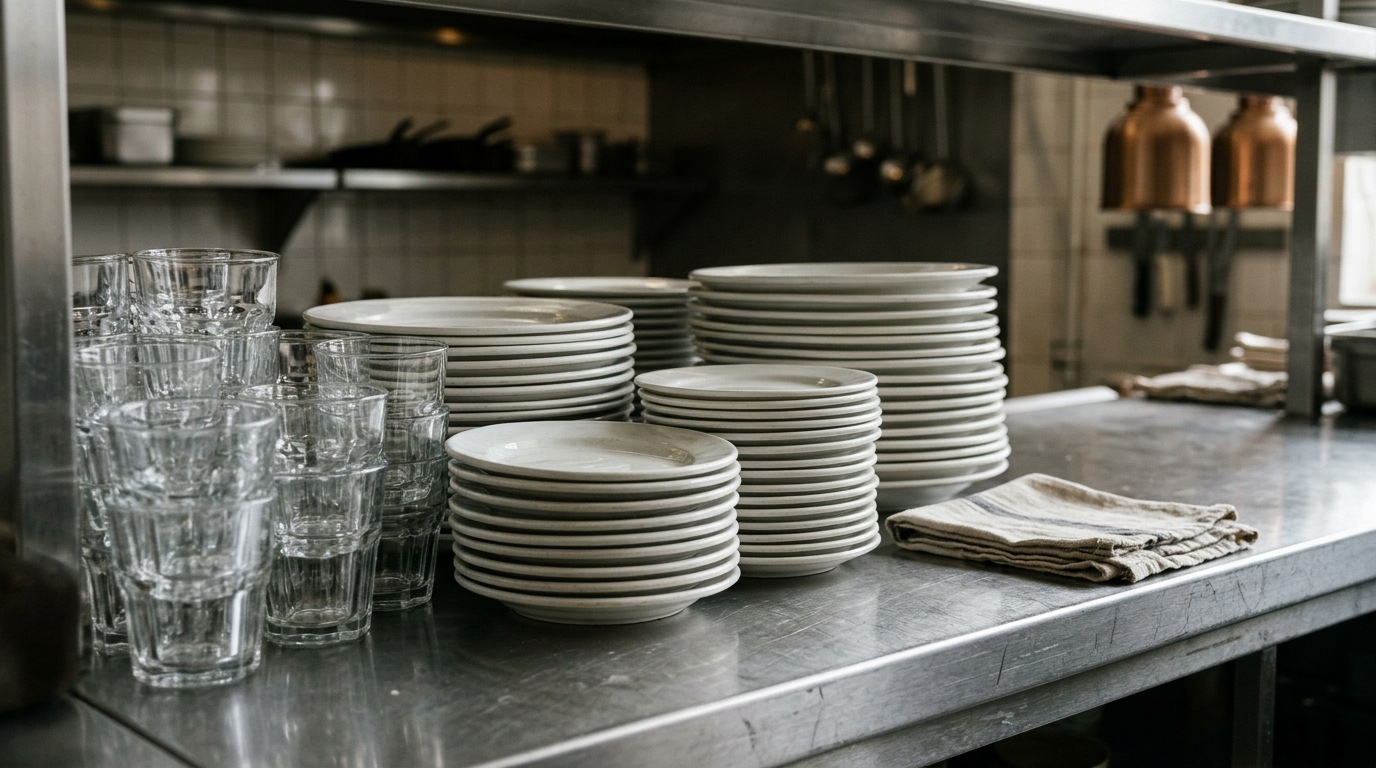
Operator checklist before you order dinnerware and glassware:
- Count seats, turns per night and the number of plates and glasses in use at peak.
- Decide which materials suit your service style.
- Check how items stack in storage and in the dish machine.
- Standardize on a few patterns so replacements are easy.
- Estimate breakage and add a spare share to each order.
Plates and glasses are the items guests touch, but they are also the items that chip, crack and disappear fastest. A beautiful plate that breaks every week is a poor buy, and an ugly plate that never breaks may spoil the look of a dish. The right choice balances looks, durability, stacking and the cost of replacement. This guide explains materials, shapes, stacking and how to plan for breakage.
This is general information about foodservice supplies. Check that items are rated for food contact and for your dish machine and oven temperatures.
Dinnerware materials
- Vitrified china: fired at high temperature so the body is dense and resists chips and moisture. It is the common choice for restaurants and handles dish machines well.
- Porcelain: a fine, hard ceramic with a smooth finish, popular for upscale service.
- Stoneware: thicker and often hand-finished in look, with a rustic feel. It can chip more easily and weighs more.
- Melamine: a durable plastic that resists breakage. It suits banquets, outdoor service and casual settings, but it has heat limits and is not for microwaves.
- Glass and tempered glass plates: unusual for dinner service but used for desserts and appetizers.
Check the maker’s temperature ratings, particularly for oven, microwave and plate warmer use.
Shape and rim
The shape of a plate affects how it stacks, how it breaks and how food looks. Wide rims protect the plate edge but waste shelf space. Rolled edges resist chips better than thin, flat rims. Coupe plates, which have no rim, look clean and stack tightly, though they are easier to spill from.
Choose plate sizes that fit your menu. A 10.5 inch dinner plate suits most entrees, while 6 to 7 inch plates suit bread, desserts and sides. Bowls come in many depths, so match them to soups, pasta and salads.
Glassware types
- Tempered glass tumblers: heated and cooled to add strength, a common choice for water and soft drinks.
- Standard glass: thinner and cheaper, best for low-volume service.
- Lead-free crystal: clear and sparkling, used in fine dining and wine service.
- Plastic and polycarbonate tumblers: shatter-resistant and suitable for patios, pools and busy venues.
Glassware sizes depend on the drink. Check the capacity and the base diameter so glasses fit your dish racks. Nesting glasses can stick together when stacked, so use racks for storage and washing.
Stacking and storage
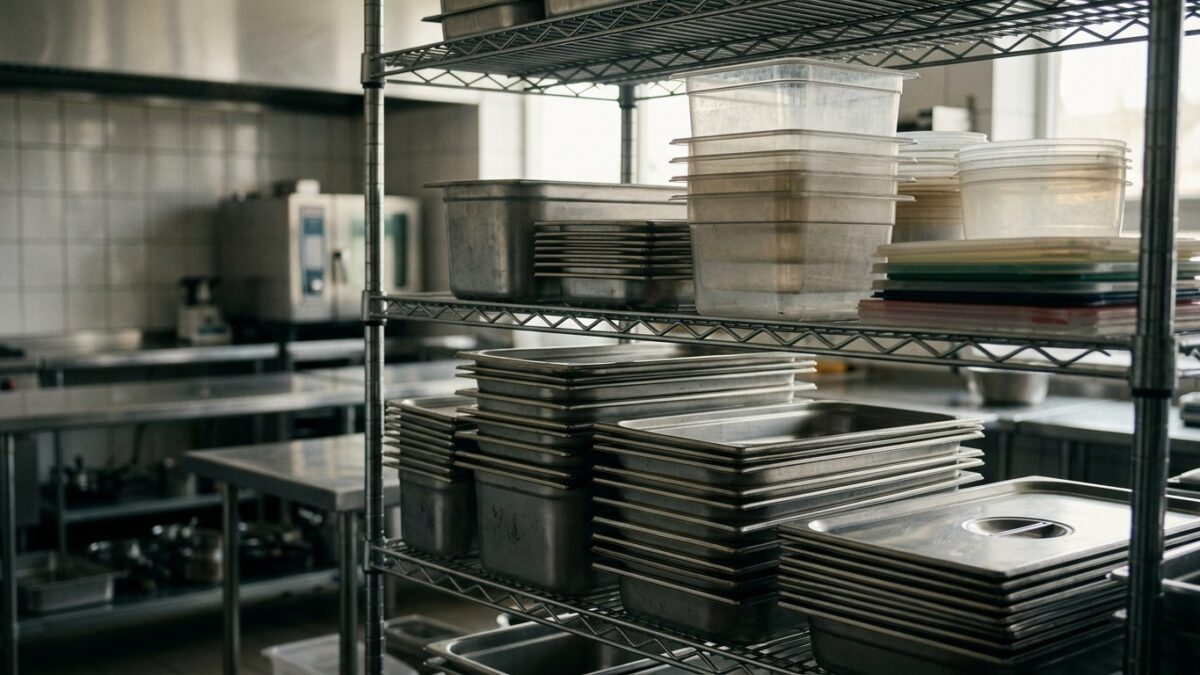
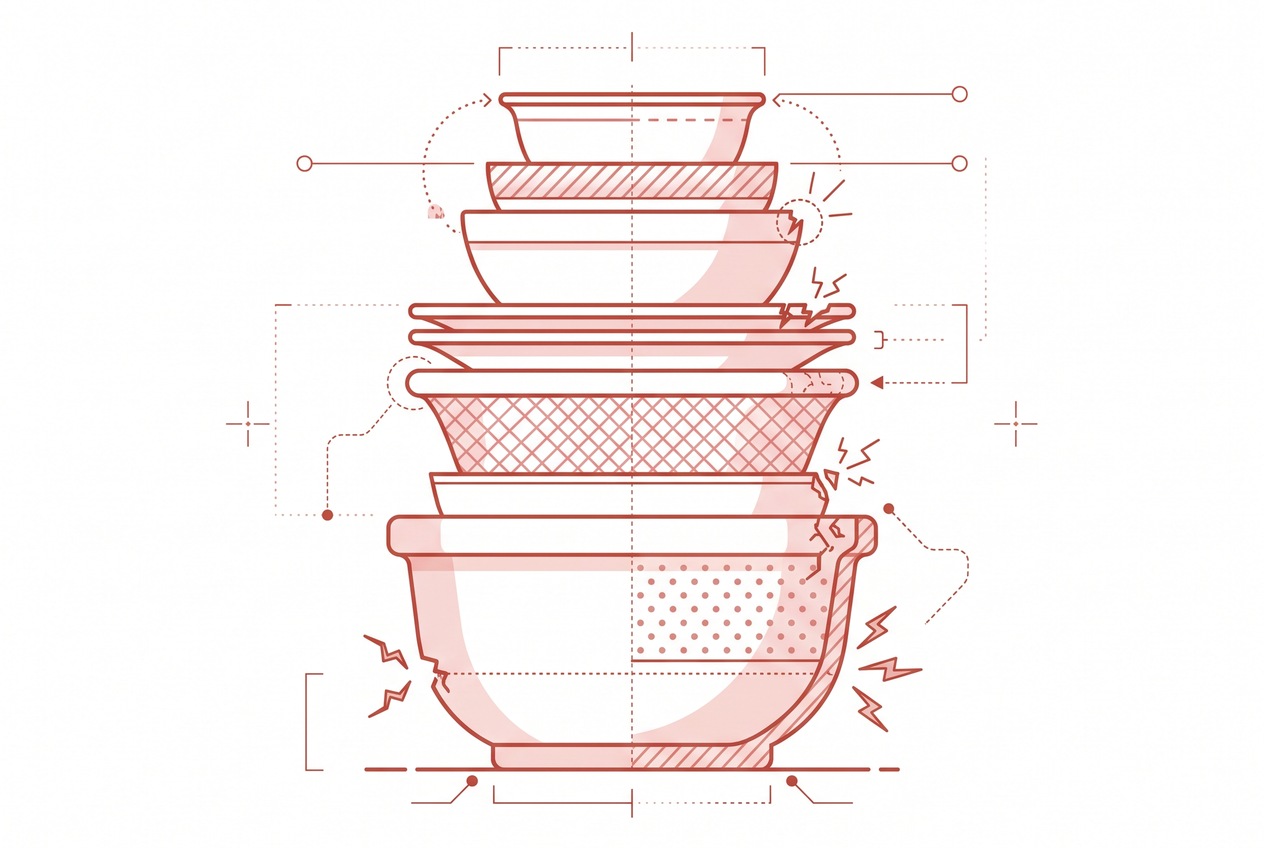
Stackable items save shelf space, and stacking also affects breakage. Heavy stacks put pressure on the bottom plates. Keep stacks to a safe height, and use dividers or rolled rims to prevent chipping. Store glasses upside down in racks to keep dust out and to protect rims.
Measure your shelves and dish racks before you order, since sizes that do not fit cause breakage and waste labor.
Breakage and replacement
Every kitchen loses items. Plan for breakage by ordering extra, often a share of the total, and track losses so you can adjust. Use a few patterns and sizes, so replacement is easy. A custom pattern may look good but can be hard to match if the supplier discontinues it.
Cost per use gives a clearer picture than price per piece. Divide the cost of an item by the number of services it is expected to last. A durable plate that costs more can cost less per use.
| Material | Durability | Cost range | Best for |
|---|---|---|---|
| Vitrified china | High | Moderate | Most restaurants |
| Porcelain | High | Moderate to high | Upscale service |
| Stoneware | Moderate | Moderate | Casual, rustic styles |
| Melamine | Very high | Low to moderate | Banquets, outdoor service |
| Tempered glass | High | Low to moderate | Everyday glassware |
| Crystal | Moderate | High | Fine dining |
Banquets, patios and special service
Large events and outdoor service change what you need. Banquets use many identical pieces at once, so a simple, stackable pattern saves storage and washing time. Patios and poolside areas often favor unbreakable tumblers and melamine plates, which handle wind, wet floors and rough handling. If you cater off-site, consider durable items that survive transport, plus crates or racks for moving them.
Rental items can be an alternative for occasional large events. Compare the cost of renting with the cost of owning, storing and washing the pieces. If you only host a large event a few times per year, renting may cost less than buying a full set.
Care
Run items through the dish machine with the correct detergent and rinse aid to prevent spots. Load plates and glasses in racks designed for them. Inspect items regularly and remove chipped or cracked pieces, which can harbor bacteria and injure guests.
Questions to ask the supplier
- Is the item rated for the dish machine, microwave and oven?
- What is the case quantity, and is the pattern stocked long term?
- How do the items stack, and what is the maximum safe stack height?
- What are the replacement and return terms?
- Are racks or dividers available for storage?
The summary
Choose dinnerware and glassware for durability, stacking and look, and match them to your dish machine and service style. Plan for breakage, standardize patterns and compare cost per use. Items that last and stack well keep service smooth and costs down.