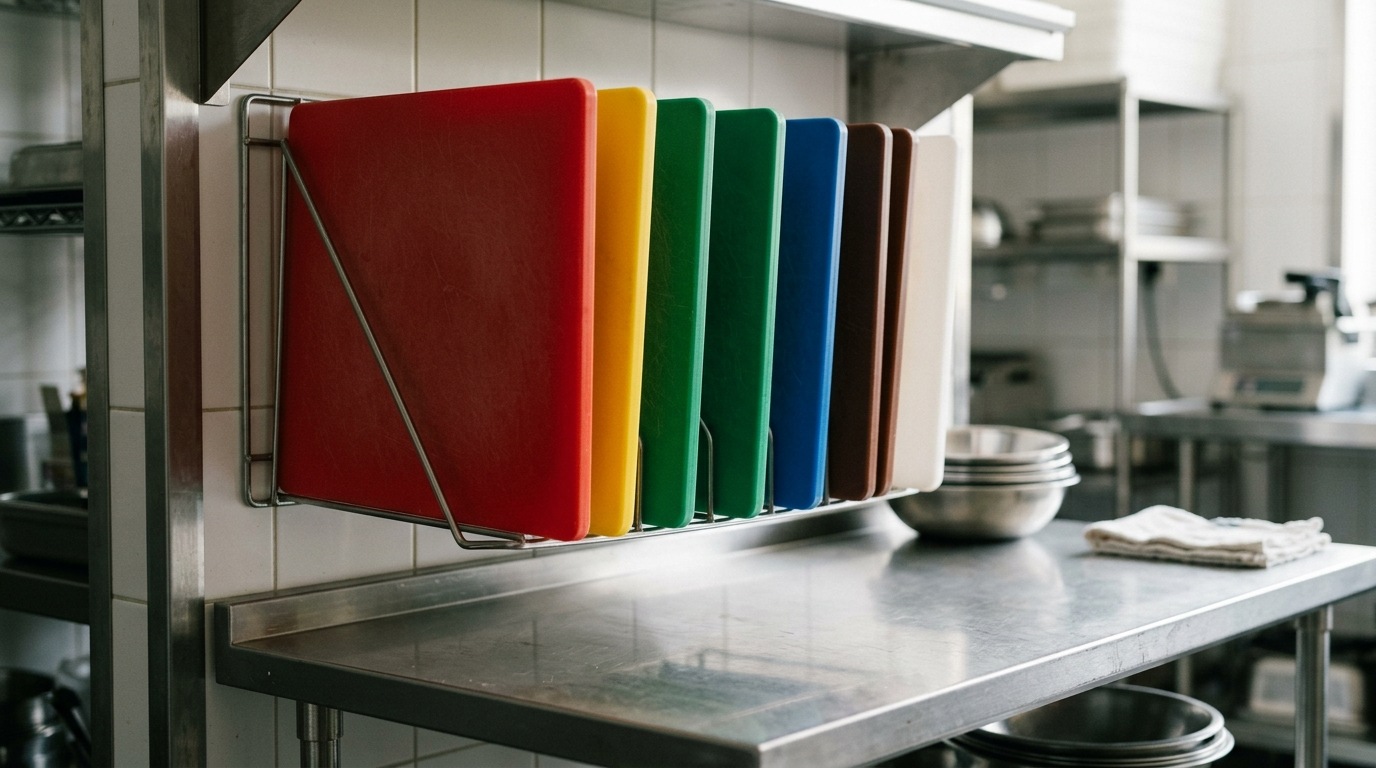
Operator checklist before you order cutting boards:
- Choose a color-coding scheme and write it down for staff.
- Decide on the materials your local health rules allow.
- Count boards by station, and add spares for dishwashing time.
- Check the size against your prep tables and your dish machine.
- Plan where boards will be stored and how they will be cleaned.
A cutting board is where raw food meets a knife, and a poor choice there can spread contamination across a kitchen. Color-coded boards give staff a simple visual rule for keeping foods apart. This guide explains how color coding works, which materials are common, how to size and store boards and how to keep them clean and safe.
This is general information about foodservice supplies. Health rules differ by location, so check the requirements of your local health department before choosing materials or a system.
Why color coding helps
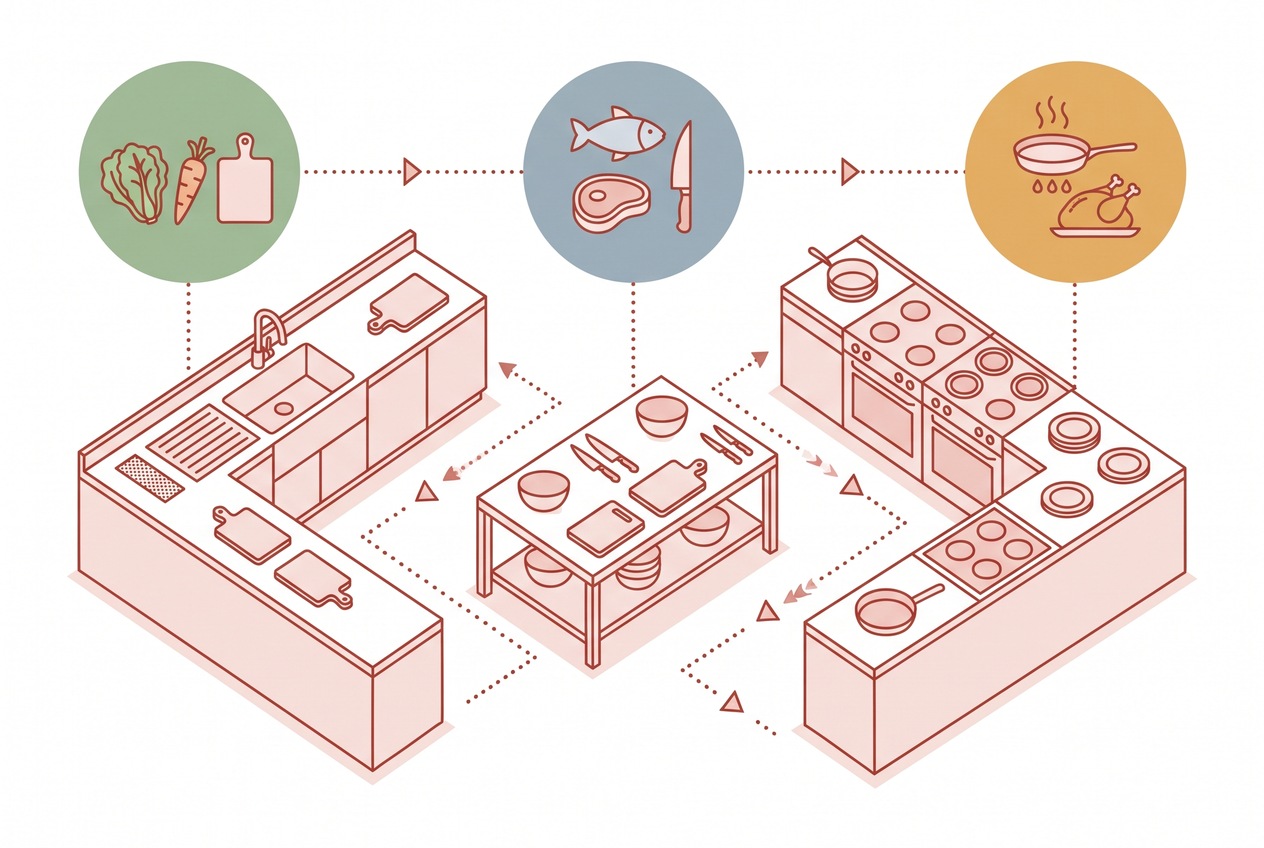
Raw meat, poultry and seafood can carry bacteria that should never reach ready-to-eat foods. Using the same board for both without cleaning in between is a classic cause of cross-contamination. Assigning a color to each type of food makes the rule easy to follow and easy to check, even in a busy kitchen.
A common color scheme
There is no single mandatory scheme, and colors can vary by supplier and by local practice. A frequently used set is:
| Color | Typical use |
|---|---|
| Red | Raw red meat |
| Yellow | Raw poultry |
| Blue | Raw fish and seafood |
| Green | Fruits and vegetables |
| White | Dairy and bakery items |
| Brown | Cooked meats |
Pick a scheme and stick to it. Post a chart at each station, train new staff and check that boards are returned to the correct place. A scheme that no one follows is no better than having no scheme.
Materials compared
- High-density polyethylene (HDPE): the most common plastic board. It is light, affordable and usually dishwasher-safe. It can warp in high heat and develops grooves over time.
- Rubber: soft on knife edges, durable and slip resistant. It is heavier, more expensive and may need a specific cleaning method.
- Wood: gentle on knives and traditionally used in some kitchens. Local rules on wood boards vary, and they need careful cleaning and drying.
- Composite: dense engineered materials that resist stains and warping. They cost more and are often heavy.
Choose the material that fits your cleaning method. If boards go through a high-temperature dish machine, check that they are rated for the heat.
Size and thickness
Boards range from small bar boards to large prep slabs. A common size for line stations is about 15 by 20 inches, and 18 by 24 inches suits larger prep tasks. Measure your prep tables and dish rack before ordering, since a board that does not fit the dish machine rack gets washed by hand.
Thickness matters for stability and lifespan. Boards of about half an inch suit light work, while three-quarters of an inch or more resist warping and can be resurfaced. Heavier boards stay in place better but are harder to move.
Keeping boards in place
A board that slides is a safety risk. Place a damp towel or a non-slip mat under the board. Some boards have rubber feet or a non-slip backing. Check that the board sits flat on the table.
Cleaning and sanitizing
Wash boards after each task or when switching between food types, following the wash, rinse and sanitize steps your local rules require. Rinse off food residue first, wash with hot, soapy water, rinse again and then sanitize with an approved solution at the correct concentration. Let boards air dry upright so air reaches both sides.
Use a brush to clean grooves, and check them often. A board with deep grooves is hard to clean and should be replaced or resurfaced.
Storage
Store boards upright in a rack, so air circulates and boards dry fully. Keep racks organized by color. Don’t stack wet boards, since trapped moisture encourages bacteria.
Keep boards away from raw food storage areas, and keep ready-to-eat boards in a clean spot.
When to replace boards
Replace a board when it has deep grooves that don’t clean, when it is cracked or warped, when it stains badly or when a coating peels. A good rule is to inspect boards regularly and note any that look worn.
Training staff to use the system
A color scheme only works when people follow it. Introduce it in a short session, show the chart and demonstrate a few examples. Place a small sign at each station that names the board colors allowed there. During the first weeks, check boards at random and correct mistakes kindly but quickly.
Make the right choice the easy choice. Keep boards of each color at the stations where they are needed, so staff don’t have to walk across the kitchen to find one. Hang knife racks and towels nearby. When a board is used for the wrong food, wash and sanitize it before it goes back, and talk about why with the team. A system that is simple, visible and reinforced becomes a habit.
Questions to ask before you buy
- Is the material rated for food contact and for my dish machine?
- What colors are available, and does the supplier offer a matching rack?
- What are the dimensions and thickness?
- Can the board be resurfaced, and how?
- What is the warranty or return policy?
The summary
Color-coded cutting boards help keep foods apart when staff follow a clear scheme. Choose a material that suits your cleaning method, size boards to your tables and dish racks, keep them from sliding and replace them when grooves become hard to clean. A simple system, followed every day, protects food and customers.